
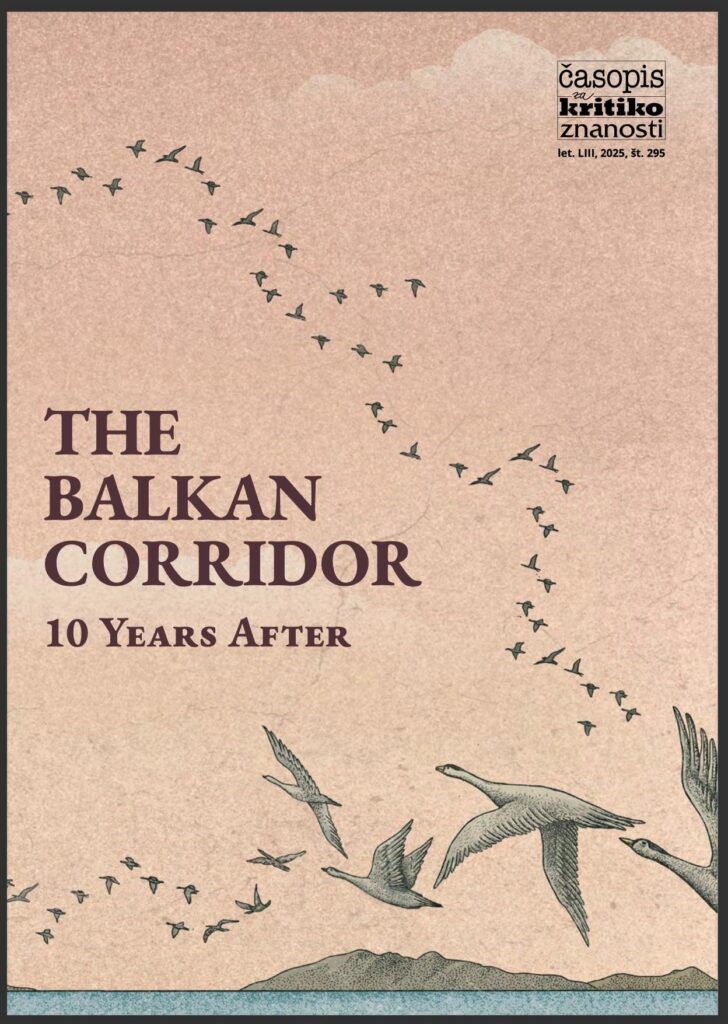
The Balkan Corridor: 10 Years After
Book published by Inštitut Časopis za kritiko znanosti Ulica talcev 2, IOOO Ljubljana
From the editorial introduction:
„…The European border regime, and with it the Balkan route, is a tool for maintaining the existing capitalist relations that drive masses of people to seek safety and a decent life abroad, despite travel restrictions. Irregular migrants are a fundamental reality of global inequality, as reflected in the unequal distribution of the right to movement. It is precisely the restriction of the right to movement that creates a situation of lawlessness, enabling extreme forms of exploitation in the fields of Italy and Spain and on construction sites, in slaughterhouses, and in factories across Europe. However, every now and then, the circumstances of these relationships lead to mass movements that even border regimes are unable to contain. One such event was the long summer of migration in 2015 and the subsequent formation of the Balkan corridor, when the European border regime was temporarily suspended and over a million people entered Europe irregularly.
This year marks a decade since this event irrevocably changed the movement of people and perceptions of migration among the European public and politicians. While irregular migration was more of a crime story before 2015, today it is at the forefront of political debate, with politicians competing with promises on who will provide more deportations. The challenges faced by migrants in their efforts to improve their chances of regularisation are also at the forefront, as demonstrated by the Spanish citizens’ initiative to regularise half a million irregular migrants in 2024. In Slovenia, a recent example of this is the introduction of the possibility for asylum seekers to transition to migrant worker status.
Irregular migration on the Balkan route dates back well before the corridor period, but it seems that the period of mass movements in 2015 and the subsequent formation and closure of the internationally organised corridor in March 2016 represent a point of no return in the perception of migration and the course of migration movements in the Balkans. In the years following the closure of the corridor, countries introduced practices of brutal police violence, intending to implement deterrence policies. While at the same time, it was precisely these violent police practices and state crimes that became points of political mobilisation, bringing together local civic initiatives and people on the move in the struggle for an equal and just society.
To reflect on what the years 2015 and 2016 represent and how border regimes, the movement of people, and the political organisation of the migrant struggles have changed over the last ten years, we have prepared this issue of the Journal for the Critique of Science…“
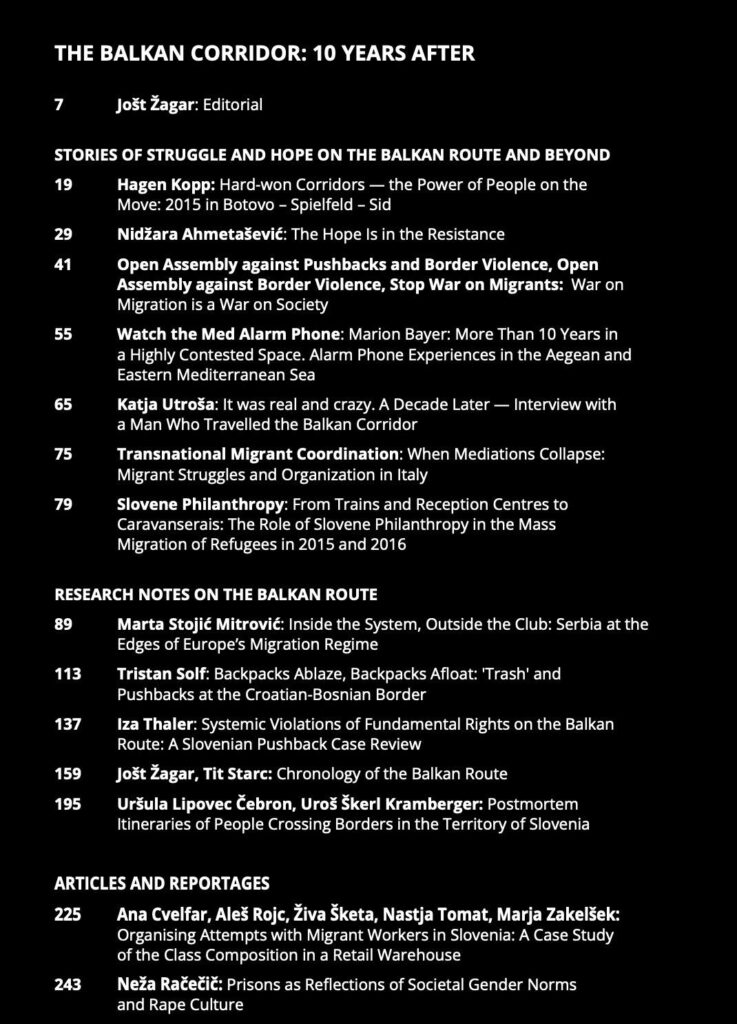
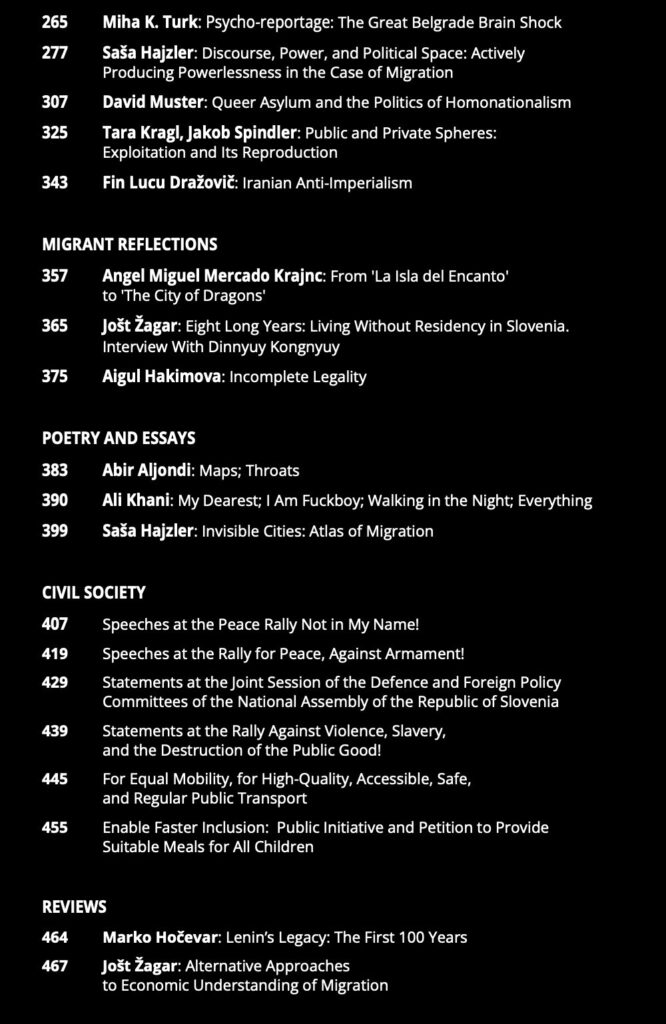
Table of content
Click here for more information and download
Recent Comments